This March, I’m thrilled to join Karoline Irschara for a keynote talk at the annual meeting of the Deutsche Physikalische Gesellschaft e. V. (DPG) in Mainz, where we’ll explore how biases impact diversity and why diversity makes better physics. As we prepare for this event, I’ve been delving into research on gender equality in academia and industry, uncovering insights that are both eye-opening and crucial for fostering a more inclusive environment.
Understanding Workplace Biases
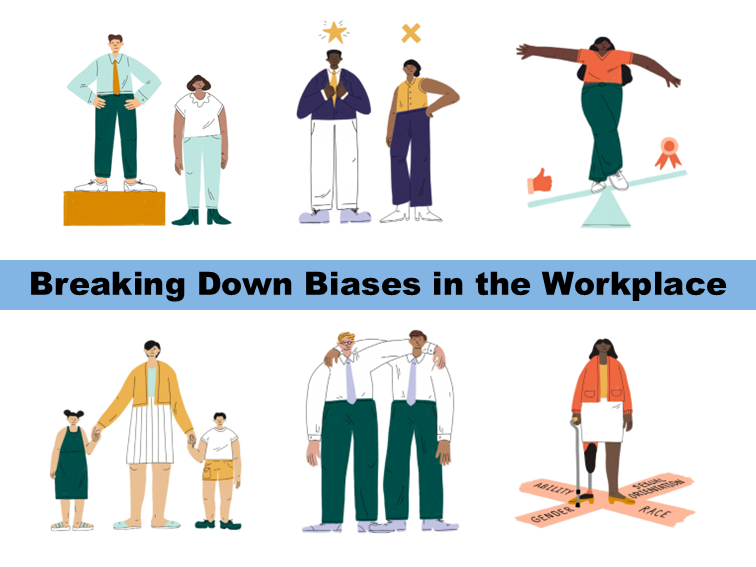
One particularly insightful resource I’ve explored is LeanIn.org’s summary on workplace biases. These biases, while often subtle, have profound impacts on career progression and recognition, especially for women. Let’s delve into some of these biases:
1. Performance Bias
Summary: Performance bias involves underestimating women’s abilities, requiring them to work harder to prove their competence compared to men.
Details: Women are often hired based on past accomplishments, while men are hired based on potential. Studies have shown that removing gender from decision-making can significantly alter outcomes. For instance, replacing a woman’s name with a man’s name on a résumé improved hiring odds by over 60%. Similarly, blind auditions in orchestras increased women’s chances of advancing by 50%. This bias results in missed opportunities and lower performance ratings for women, impacting their career progression.
2. Attribution Bias
Summary:Attribution bias leads to overlooking women’s contributions and giving them less credit for success while blaming them more for failures.
Details:Women often receive less credit for success and more blame for failure, even when working alongside men. This bias manifests in meetings, where women are more likely to be interrupted. Research indicates that men interrupt women nearly three times as often as they interrupt other men. Women, too, fall into this pattern. Such biases contribute to self-doubt among women, affecting their confidence in pursuing promotions or new jobs.
3. Likeability Bias
Summary:Likeability bias penalizes women for assertiveness, branding them as “too aggressive” or “bossy,” which affects their career advancement.
Details:Women face a double bind: they must assert themselves to be seen as effective, yet doing so often results in being less liked. This bias is particularly pronounced for women of color, who face additional stereotypes. Black women, for example, are often stereotyped as angry and aggressive, while Asian American women are seen as communal, affecting perceptions of their leadership capabilities.
4. Maternal Bias
Summary:Maternal bias assumes mothers are less committed and competent, leading to fewer opportunities and higher standards for them.
Details:Research shows that maternal bias is the strongest type of gender bias. When hiring managers know a woman has children, she is 79% less likely to be hired and offered significantly lower salaries. Fathers, too, face penalties for family-related time off, affecting their performance ratings and future earnings.
5. Affinity Bias
Summary:Affinity bias favors those similar to ourselves, impacting mentorship and hiring decisions, and negatively affecting diversity.
Details:Straight white men, holding more positions of power, often gravitate toward other white men, negatively affecting women, people of color, and LGBTQ employees.
6. Double Discrimination
Summary:Women of color face compounded biases, receiving less support and slower promotions compared to white women.
Details:This dynamic extends to other groups, including lesbian women, Latinas, and women with disabilities, who face greater challenges in securing employment.
Understanding Workplace Biases
While these biases may be subtle, their impact is substantial, creating barriers to opportunities and recognition. Addressing them requires a collective effort to challenge assumptions and implement fair and transparent evaluation criteria. Promoting blind recruitment processes and actively supporting underrepresented groups can foster a more equitable workplace.
By understanding and tackling these biases, we can pave the way for a more just future—much sooner than the 250-year timeline predicted by the World Economic Forum. Let’s commit to breaking down these barriers and creating an inclusive environment where all individuals can thrive, driving meaningful change together!
Feature photo: LeanIn.org
For further information or if you have any questions, please do not hesitate to contact me.
